ADULT ADHD ASSESSMENT · 18+

ADHD Assessment for Adults

The assessment includes questionnaires, a clinical interview, corroborative information where available, a results review and a written report.

Diagnostic Letter

$1,530

One-page letter

Comprehensive Report

$2,220

Approximately 10 to 15 pages

REPORT TURNAROUND

Within four weeks

Appointments

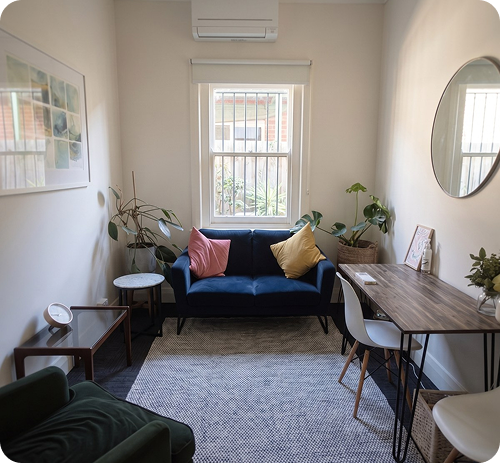
Telehealth Australia-wide or in person in Brunswick East
AT A GLANCE

Who is it for

Adults aged 18 and over. You do not need to be certain about ADHD before booking.

What does it cost?

Diagnostic Letter $1,530. Comprehensive Report $2,220. A 50% deposit secures the booking.

Where does it happen?

Telehealth Australia-wide, or in person in Brunswick East.

When do I get my report?

Written reports are provided within four weeks.

Can I talk to someone first?

Yes. Book a free 15-minute call. Camera off is fine.

What do I receive?

The assessment includes a results review and a written report.

Is ADHD Assessment the right service for me?

ADHD Assessment is for adults who want to know whether ADHD explains a long-standing pattern in attention, executive functioning, activity level or impulsivity.

Some people have wondered for years. For others the question arrives later, when rising demands expose difficulties that structure, support, routine or sheer effort used to cover. You may already have diagnoses that explain part of the picture but leave the rest unaccounted for.

The assessment looks at how the difficulties developed, when they show up and when they do not, how they affect everyday life, and how the information fits together. The aim is to work out whether ADHD best explains the pattern, and what else is contributing.

YOU DO NOT NEED TO BE CERTAIN BEFORE YOU BOOK

You do not need to know in advance whether ADHD is the explanation. The assessment examines whether ADHD best explains the pattern.

Is ADHD Assessment the right service for me?

ADHD Assessment is for adults who want to know whether ADHD explains a long-standing pattern in attention, executive functioning, activity level or impulsivity.

Some people have wondered for years. For others the question arrives later, when rising demands expose difficulties that structure, support, routine or sheer effort used to cover. You may already have diagnoses that explain part of the picture but leave the rest unaccounted for.

The assessment looks at how the difficulties developed, when they show up and when they do not, how they affect everyday life, and how the information fits together. The aim is to work out whether ADHD best explains the pattern, and what else is contributing.

YOU DO NOT NEED TO BE CERTAIN BEFORE YOU BOOK

You do not need to know in advance whether ADHD is the explanation. The assessment examines whether ADHD best explains the pattern.

What does ADHD Assessment look at?

ADHD is assessed from a pattern across your life. No single questionnaire result, difficulty with attention or problem with organisation determines the outcome.

ADHD is assessed from a pattern across your life. No single questionnaire result, difficulty with attention or problem with organisation determines the outcome.

How attention works across different situations

We look at how you direct, hold and shift attention. Being able to concentrate for long periods does not rule out ADHD. Attention may hold well when a task is new, urgent, stimulating or interesting, and get much harder when it is repetitive, delayed, set by someone else or offers little reward now.

Executive functioning in everyday life

Starting tasks, holding things in mind, organising, working out an order, judging and managing time, remembering to do things, finishing what you start and pacing effort. What these mean depends on how they developed, how steady they are across settings, and how much they affect what you can do.

Activity level and impulsivity

In adults, raised activity may show as restlessness you feel rather than others see, frequent movement, a need for stimulation or finding it hard to stay still. Impulsivity can affect speech, decisions, spending, switching tasks, emotional regulation, or acting before you have thought something through.

Factors that can overlap

Autism, trauma, anxiety and other mental health difficulties, learning differences, sleep, pain, medication, physical health and cognitive functioning can all shape your experiences. We consider how these interact rather than reading any feature in isolation.

Together, this information helps the psychologist decide whether the overall pattern is consistent with ADHD and what else may be contributing.


How does ADHD Assessment work?

ADHD Assessment draws on several sources of information because the clinical question concerns a developmental pattern across time and settings. The process follows the Australian ADHD Professionals Association guidelines.

Questionnaires

Before the main appointment, you complete questionnaires about current and past experiences relevant to ADHD.

Questionnaire findings contribute information about particular aspects of the profile. They are interpreted alongside the developmental history, clinical interview, corroborative information and other relevant clinical information. They do not determine the assessment outcome on their own.

Clinical interview

The main clinical interview takes approximately two to three hours.

The psychologist obtains a developmental and clinical history covering childhood, adolescence and adulthood, with particular attention to the emergence, persistence and functional effect of characteristics relevant to ADHD.

The interview also examines variation across settings and circumstances and any factors that may affect interpretation.

Corroborative information

Corroborative information is optional, and we strongly encourage it. It provides an additional perspective on development and long-standing patterns, and usually comes from someone who knows you well and, where possible, can tell us about your childhood or adolescence.

Their account is interpreted alongside the person’s own history and the other information gathered during the assessment. It does not replace the person’s account of their own experience.

Clinical interpretation

After the information has been gathered, the psychologist considers the findings together.

This includes whether the developmental history and current pattern are consistent with ADHD, and how closely the different sources of information agree. We also consider variation across settings and whether other factors provide an additional or more plausible explanation for part of the profile.

Results review and report

The results review explains the assessment outcome and the clinical reasoning supporting it.

A Diagnostic Letter or Comprehensive Report is then provided according to the option selected. Written reports are provided within four weeks.

How does ADHD Assessment work?

ADHD Assessment draws on several sources of information because the clinical question concerns a developmental pattern across time and settings. The process follows the Australian ADHD Professionals Association guidelines.

Questionnaires

Before the main appointment, you complete questionnaires about current and past experiences relevant to ADHD.

Questionnaire findings contribute information about particular aspects of the profile. They are interpreted alongside the developmental history, clinical interview, corroborative information and other relevant clinical information. They do not determine the assessment outcome on their own.

Clinical interview

The main clinical interview takes approximately two to three hours.

The psychologist obtains a developmental and clinical history covering childhood, adolescence and adulthood, with particular attention to the emergence, persistence and functional effect of characteristics relevant to ADHD.

The interview also examines variation across settings and circumstances and any factors that may affect interpretation.

Corroborative information

Corroborative information is optional, and we strongly encourage it. It provides an additional perspective on development and long-standing patterns, and usually comes from someone who knows you well and, where possible, can tell us about your childhood or adolescence.

Their account is interpreted alongside the person’s own history and the other information gathered during the assessment. It does not replace the person’s account of their own experience.

Clinical interpretation

After the information has been gathered, the psychologist considers the findings together.

This includes whether the developmental history and current pattern are consistent with ADHD, and how closely the different sources of information agree. We also consider variation across settings and whether other factors provide an additional or more plausible explanation for part of the profile.

Results review and report

The results review explains the assessment outcome and the clinical reasoning supporting it.

A Diagnostic Letter or Comprehensive Report is then provided according to the option selected. Written reports are provided within four weeks.

What is the appointment like?

The main appointment is a clinical interview about how ADHD characteristics have shown up across your life and how they affect you now.

We accommodate your needs

If you are meeting by telehealth, your camera can stay off. You can move around, use fidgets, refer to notes, take breaks or change position. A support person can join you.
There is time to think, to correct something you said earlier, or to say you are not sure. The point is an accurate picture, not a performance.

We are trauma-informed

Some of what we ask about can be hard to talk about. Where distressing experiences are relevant, we ask for enough to understand them clinically and no more. This is not a trauma-processing session. You can decline a question or ask to leave a topic.

What is the appointment like?

The main appointment is a clinical interview about how ADHD characteristics have shown up across your life and how they affect you now.

Adjustments during the appointment

If you are meeting by telehealth, your camera can stay off. You can move around, use fidgets, refer to notes, take breaks or change position. A support person can join you.

There is time to think, to correct something you said earlier, or to say you are not sure. The point is an accurate picture, not a performance.

Questions about difficult experiences

Some of what we ask about can be hard to talk about. Where distressing experiences are relevant, we ask for enough to understand them clinically and no more. This is not a trauma-processing session. You can decline a question or ask to leave a topic.

WHO WILL I MEET?

Clinical Neuropsychologist

Ruth works across Autism and ADHD assessment, neuropsychological assessment and therapy. Her neuropsychology training is particularly useful when several factors may be contributing to the same difficulty, because the task is to work out what is producing the pattern and what that means for intervention.

WHO WILL I MEET?

Clinical Neuropsychologist

Ruth works across Autism and ADHD assessment, neuropsychological assessment and therapy. Her neuropsychology training is particularly useful when several factors may be contributing to the same difficulty, because the task is to work out what is producing the pattern and what that means for intervention.

What do I receive after the assessment?

Both report options follow the same assessment process. The fee differs because of the document you receive at the end.

Diagnostic Letter

One Page

Confirms the assessment outcome. For people who need formal documentation without the detailed history, formulation and recommendations.

Comprehensive Report

Approximately 10 to 15 pages

Includes relevant developmental and clinical history, ADHD characteristics, questionnaire findings, clinical formulation and recommendations.

Fees for ADHD Assessment

Both report options follow the same assessment process. The fee differs because the document you receive at the end differs.

Diagnostic Letter

$1,530

Includes the questionnaires, clinical interview, corroborative information where available, results review and one-page Diagnostic Letter.

Comprehensive Report

$2,220

Includes the same assessment process, with a detailed written report of approximately 10 to 15 pages.

BOOKING AND AFTER HOURS

A 50% deposit secures the booking. A flat $15 fee applies to any appointment booked outside business hours.

ADHD Assessment FAQ

You can provide the developmental information that is available to you. Gaps or uncertainty in childhood recall are considered as part of the clinical interpretation and are weighed alongside the other information gathered during the assessment. Where corroborative information is available, this may provide additional information about childhood or long-standing patterns.
No. Corroborative information is optional. We strongly encourage it, because someone who knew you as a child can often add detail that is difficult to recall on your own.

An ADHD assessment should still explain the clinical picture when the information does not support ADHD.

Difficulties with attention, organisation, starting tasks, holding things in mind, managing time or regulating activity are not specific to ADHD. The same difficulties occur alongside Autism, trauma, anxiety or other mental health difficulties, learning differences, disturbed sleep, pain, medication effects, physical health or differences in cognitive functioning. What they mean clinically depends on your developmental history, when they occur, how steady they are across settings, and how the findings relate to each other.
If your overall pattern does not fit ADHD, we look at what else may account for your experiences. That includes whether the difficulties reflect another clinical process, whether several factors are contributing at once, and whether the information points to a different question that needs its own assessment.
ADHD Assessment cannot rule out every possible alternative. Where the information supports another clinical formulation, we explain that in the report. Where a different question needs its own assessment, the report says what remains uncertain and what type of assessment would answer it.
The report sets out the outcome, the clinical reasoning behind it, the factors that appear to be contributing to your difficulties, and any questions left unresolved. The aim is to explain the pattern clearly even when ADHD is not the explanation.
Mindkit also offers Combined Autism and ADHD Assessment for adults who want both questions considered within the same assessment process.
Yes. Neuropsychological assessment answers a different question. It looks at attention, memory, processing speed and executive functioning, and is useful when an everyday difficulty could have more than one explanation. For example, trouble remembering things may come from inconsistent attention when you first learned them, from retrieval, from fatigue, sleep or pain. Testing helps tell those apart. Reading, writing and numeracy can be examined the same way. Neuropsychological testing is not required to identify ADHD, and test performance does not determine whether you meet the criteria. It is an additional assessment for a separate question. Because some history and clinical information have already been gathered during your ADHD assessment, it can be added at a $500 discount from the usual adult fee. Tier 1 is $2,180, Tier 2 is $2,680 and Tier 3 is $3,180.
The Comprehensive Report is a detailed account of the assessment, typically around 10 to 15 pages, although the length can vary according to the clinical information that needs to be included. It describes the person’s relevant developmental and clinical history, the ADHD characteristics identified during the assessment process, and findings from questionnaire measures and other information gathered during the assessment. The report explains how the available information relates to the ADHD criteria and the clinical reasoning supporting the assessment outcome. The formulation brings these findings together to describe how ADHD appears in that individual. It covers attention regulation, executive functioning, activity level and impulsivity, variation across settings and circumstances, and any overlapping factors that affect interpretation. The report also includes recommendations based on the person’s profile and the questions addressed during the assessment.
Usually not, and it is better to know that up front. The NDIS does not typically accept ADHD as a disability. It is possible to have it listed, but very difficult to get supports funded under it, even where ADHD is severe and the available medications have been tried. The NDIA generally treats ADHD as a medical condition. Where it is accepted, that is normally on evidence that all available treatments have been tried and significant impact remains. If you also have Autism or another condition, an NDIS application may still be worth considering. We can talk that through during your assessment. Access and funding are decided by the NDIA, not by us.
Yes. ADHD can form part of a Disability Support Pension application, although the assessment report on its own is generally not sufficient. For that, the psychologist writes a separate letter and provides a template for your GP to work from as well. It covers the treatments that have been tried and the impact that remains, written against the government’s Impairment Tables, which is what Services Australia assesses. Mindkit offers this as a separate service, and the page for it explains what is involved. We do not decide whether you qualify. Services Australia does.
The psychologist asks about childhood, adolescence and adulthood, and how attention, executive functioning, activity level and impulsivity have changed over time. You are not expected to recall everything. Where details are uncertain, that is taken into account. We also ask when the difficulties are more and less obvious. ADHD characteristics shift with structure, task demands, novelty, interest, urgency and being answerable to someone else. Understanding that variation helps separate a persistent ADHD pattern from difficulties that only appear under particular conditions. Other parts of your history are considered where they affect interpretation, including Autism, trauma, mental health, learning differences, sleep, pain, medication, physical health and cognitive functioning. If a corroborative interview is included, it is done separately with the person providing it. They do not need to sit in on your appointment unless they are coming as your support person.

Ready to start?

If you are ready to proceed, send us an enquiry and we will provide the information you need to arrange the assessment.

If you are still deciding whether ADHD Assessment is the right service, you can book a free 15-minute telehealth consult first. Camera off is fine.