
Relationships can be affected by differences in communication, sensory needs, emotional regulation, executive functioning, intimacy, and the amount of practical or caregiving work each person is carrying.
Mindkit works with couples and partners across different relationship structures, including monogamous, polyamorous, open and other non-monogamous relationships.
Joint session, two people
50 minutes, weekday. $485 for 75 minutes.
Individual intake, each partner
APPOINTMENTS
Telehealth across Australia, or in person in Brunswick East

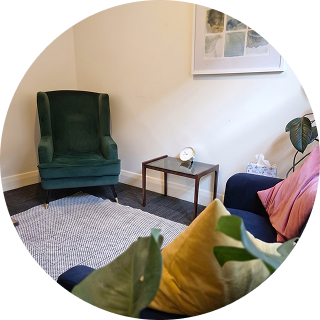
Every partner attends a separate 50-minute intake appointment before joint sessions begin.
Weekday joint sessions for two people start at $325 for 50 minutes or $485 for 75 minutes.
*Different fees apply for three or more partners or appointments outside business hours.
Couples Therapy may be useful when difficulties between you have become repetitive, difficult to resolve, or increasingly influential in everyday life.
You might understand the problem intellectually but still find yourselves having the same disagreement. Responsibilities may have become uneven or difficult to negotiate. One person may feel repeatedly misunderstood, criticised, dismissed or responsible for keeping the relationship functioning. You may also be trying to understand a relationship differently after recognising Autism, ADHD or another form of neurodivergence in one or more partners.
You do not need a formal Autism or ADHD assessment to work with us. Couples Therapy is available where one partner is neurodivergent, several partners are neurodivergent, neurodivergence is suspected but has not been formally identified, or no partner currently has a formal assessment.
Self-identified and questioning neurodivergent people are welcome. You do not need documentation to be taken seriously here.
Couples Therapy may be useful when difficulties between you have become repetitive, difficult to resolve, or increasingly influential in everyday life.
You might understand the problem intellectually but still find yourselves having the same disagreement. Responsibilities may have become uneven or difficult to negotiate. One person may feel repeatedly misunderstood, criticised, dismissed or responsible for keeping the relationship functioning. You may also be trying to understand a relationship differently after recognising Autism, ADHD or another form of neurodivergence in one or more partners.
You do not need a formal Autism or ADHD assessment to work with us. Couples Therapy is available where one partner is neurodivergent, several partners are neurodivergent, neurodivergence is suspected but has not been formally identified, or no partner currently has a formal assessment.
Self-identified and questioning neurodivergent people are welcome. You do not need documentation to be taken seriously here.
Couples Therapy can address recurring patterns of conflict, misunderstanding or disconnection, particularly where the same problem continues despite repeated attempts to resolve it.
Couples Therapy can address recurring patterns of conflict, misunderstanding or disconnection, particularly where the same problem continues despite repeated attempts to resolve it.
The detailed clinical work is then to understand the particular pattern in that relationship and identify what needs to change.
Every partner is heard separately before joint work begins.

You can speak with us before booking to ask questions, discuss what you are looking for and get a sense of the clinician you may be working with.

Every partner attends a separate 50-minute intake appointment before joint work begins.
Every partner attends a separate 50-minute intake appointment before joint work begins. Each person can describe the relationship from their own perspective before joint work begins.

You meet with the clinician together for 50 or 75 minutes. We generally recommend 75 minutes for relationship therapy, allowing time to examine and work with an interaction.
The work draws primarily on emotion-focused therapy, with systemic and parts-based approaches, neurodivergence psychoeducation and resourcing.

The clinician examines recurring interactions, including what led to a disagreement, how each person understood and responded to it, and what followed. This helps identify the pattern and what needs to change.
Every partner is heard separately before joint work begins.

You can speak with us before booking to ask questions, discuss what you are looking for and get a sense of the clinician you may be working with.

Every partner attends a separate 50-minute intake appointment before joint work begins. Each person can describe the relationship from their own perspective before joint work begins.

You meet with the clinician together for 50 or 75 minutes. We generally recommend 75 minutes for relationship therapy, allowing time to examine and work with an interaction.
The work draws primarily on emotion-focused therapy, with systemic and parts-based approaches, neurodivergence psychoeducation and resourcing.

The clinician examines recurring interactions, including what led to a disagreement, how each person understood and responded to it, and what followed. This helps identify the pattern and what needs to change.
Partners do not need to communicate in the same way during therapy.

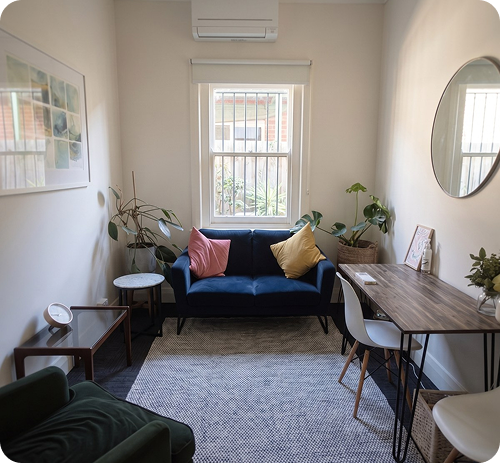

Neurodivergence is one part of understanding each person’s needs, preferences and experiences within a relationship. Considering it alongside both partners’ expectations, circumstances and relationship history can help couples understand each other and find arrangements that suit them both.
For example, one person may need time to process a conversation, while their partner prefers to talk things through as they arise. If a pause is interpreted as withdrawal, both people can leave the conversation feeling misunderstood. Understanding what the pause means to that person gives the couple something specific to discuss: how to allow processing time while making clear when they will return to the conversation.
Sometimes the relationship work identifies a practical difficulty that needs more direct support outside the joint session.
ADHD coaching can be added where executive-function difficulties are contributing to the relationship. This may include planning, organisation, task initiation, time management, routines or finding systems that are workable for the person who will actually be using them.
A therapy assistant can also help with putting agreed strategies into practice between sessions. This can be useful when the difficulty is less about understanding what needs to happen and more about making it happen consistently in everyday life.
These supports can be used by one or both partners where relevant. They do not replace the relationship work. They provide additional help with the practical processes that may be contributing to the pattern being addressed in Couples Therapy.
Individual intake appointments are invoiced separately to each person. The after-hours fee is a flat $15 addition to the joint session, regardless of how many people attend.
50 minutes, weekday. $290 after hours. Every partner attends a separate intake before joint therapy begins.
$325 for 50 minutes or $485 for 75 minutes on weekdays. After hours, $340 and $500. We generally recommend 75 minutes.
Three people: $425 for 50 minutes or $585 for 75 minutes on weekdays; $440 for 50 minutes or $600 for 75 minutes after hours.
Four people: $500 for 50 minutes or $660 for 75 minutes on weekdays; $515 for 50 minutes or $675 for 75 minutes after hours.
Sessions for five or more people are quoted individually.
Couples Therapy is not eligible for a Medicare rebate. NDIS funding is available to self-managed and plan-managed participants where the relationship therapy relates to your NDIS plan goals. A travel fee applies for in-person NDIS sessions.
No. You do not need a formal Autism or ADHD assessment to book Couples Therapy. The service is available where one partner is neurodivergent, several partners are neurodivergent, neurodivergence is suspected but has not been formally identified, or no partner currently has a formal assessment.

Book a free 15-minute consult to discuss your situation and decide whether Couples Therapy is the right fit.
If you feel ready to begin, book a Couples Therapy session
